
Finding Virginia Beach Residents
Virginia Beach has no single public roster of everyone who lives here. A property card may identify an assessment owner. A deed records grantor and grantee roles. A city directory may place a subscriber at an address in a particular year. The voter status portal is for the voter or an expressly authorized user, not an open name search. These roles should stay separate. That simple habit prevents an owner, a mailing recipient, and an occupant from being treated as the same person.
Start with the item you can identify precisely. An address works best with the assessor and map. A case number belongs with the court. A past household needs a dated directory or archive entry. The result is a source trail, not a combined profile of a person.
- For an address, use the property search and save the GPIN, situs address, legal description, and date.
- For a recorded transfer, take the GPIN or legal description to the Circuit Court Clerk’s land-record route.
- For an older household, search the library directory collections under both Virginia Beach and Princess Anne County.
- For a court name, narrow by locality, court level, date, party role, and case number before treating a hit as relevant.
- When no online route fits, contact the custodian, library, archive, or city FOIA office for the documented access channel.
Note: A name result is a lead until its role, date, and locality match the question.
Virginia Beach Resident Custodians
Virginia Beach is an independent city. Its functions are divided among city offices, rather than a county recorder and county seat. The Assessor maintains the current assessment layer. The Circuit Court Clerk holds land records, probate material, and other court files. The General Registrar administers local elections and district information. The library and Library of Virginia hold the historical layers. For a full address-by-address sequence, use the Virginia Beach streets directory route after identifying the parcel.
Circuit Court Clerk Land Records
2425 Nimmo Parkway
Virginia Beach, VA 23456
757-385-8821
Virginia Beach Real Estate Assessor
2424 Courthouse Drive
Virginia Beach, VA
757-385-4601
General Registrar
500 Studio Drive
Virginia Beach, VA 23452
757-385-8683
Virginia Beach and Princess Anne
Virginia Beach absorbed Princess Anne County in 1963. That change is the key local quirk in a historical residents directory search. A family, deed, church record, court book, or directory lead can be indexed under Princess Anne County even when the present address is in Virginia Beach. Search both names. A modern city-only search can miss the predecessor record entirely.
The Library of Virginia inventory reaches back to Princess Anne County order books from 1691 and includes deed indexes, wills, electoral minutes, church material, and chancery records. Current portals do not replace that shelf. They answer a different, newer question.
- Parcel
- A defined piece of land, usually joined across city systems by its GPIN.
- Index
- A finding tool that points to a record, rather than the complete record itself.
- Criss-cross directory
- A reverse directory that begins with an address and may name an occupant or subscriber.
- Situs address
- The physical location of a parcel, distinct from the tax mailing address.
Virginia Beach Parcel Search
The free Virginia Beach Property Search is the strongest current address entry point. It accepts PIN and situs-address terms, then offers property type, sale date, sale price, neighborhood, property use, and council-district filters. Results can be sorted by PIN, address, or owner, with map and record-card links. The inspected configuration reported a 300-result view limit and a 500-row Excel limit, so a broad result set should be narrowed before it is exported.
| Search field | Virginia Beach use |
|---|---|
| PIN | Use the GPIN/PIN when it is known. |
| Address | Enter situs number and street terms, then choose a suggestion if offered. |
| Neighborhood | Narrows results with the portal’s local neighborhood list. |
| Council District | Adds civic context, not proof of residency. |
The property-search screen shows the address and PIN controls used to begin a parcel trail.
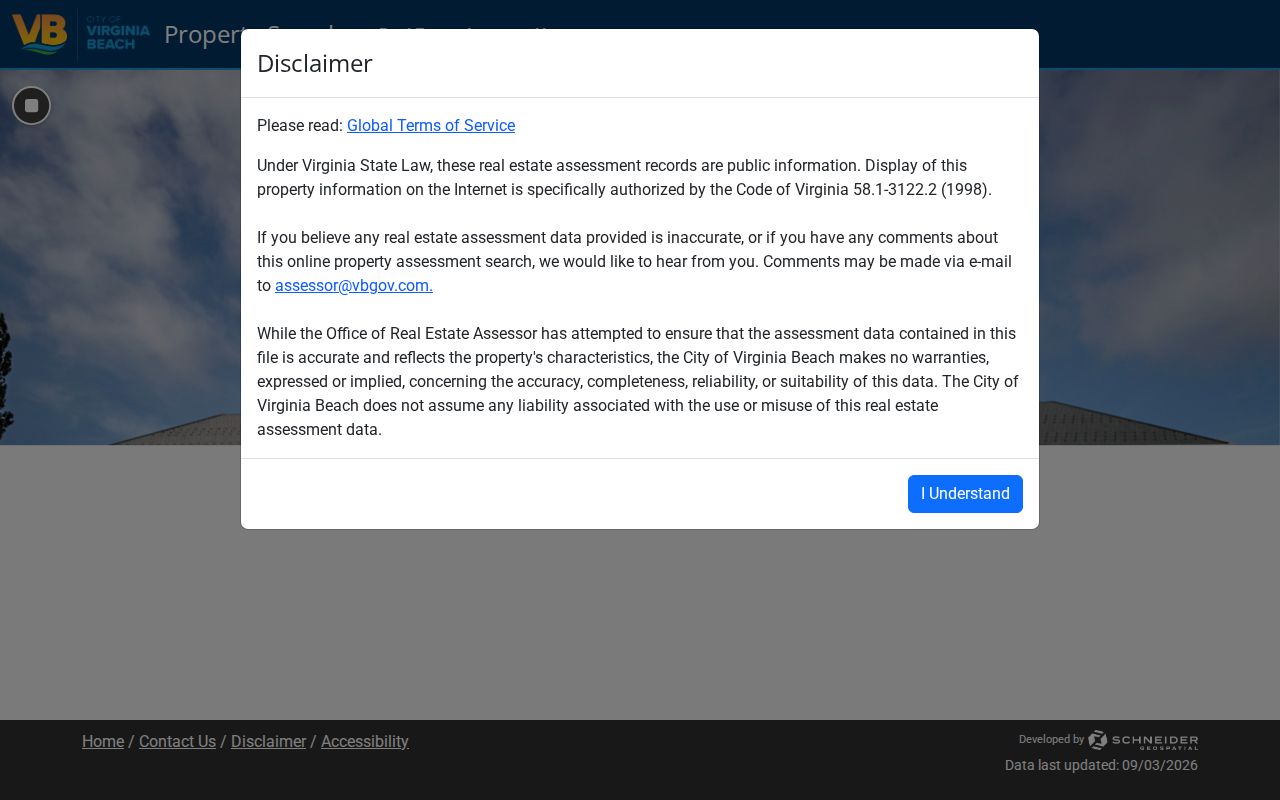
Save the GPIN before moving to another system because a deep map or search session may not retain the original query.
Virginia Beach Maps Before Names
The Virginia Beach Map Center provides VBMap, open GIS data, map downloads, district information, and a historical aerial viewer. Parcel geometry, zoning, boundaries, and aerial context help distinguish one street address from another. The assessor application also exposes a parcel service. A parcel line is a useful starting point, but the recorded plat and legal description control when boundaries matter.
Map work is especially helpful where an address crosses a neighborhood label, ZIP routing area, council district, or older subdivision. It can show an adjacent lot or a changed road, but it cannot establish who occupies a home.
The property-information map service underlies the parcel layer available through the city’s mapping tools. Use the map with the GPIN and legal description, not as a substitute for the clerk’s recorded instrument.
Virginia Beach Deed Trails
The Circuit Court Clerk records and permanently stores Virginia Beach deeds, mortgages, plats, judgments, and UCC filings. A deed trail begins with the current GPIN and legal description, then moves from the latest instrument to the prior grantor. Record the instrument number, recording date, grantor, grantee, book or page, and legal description at every step. Ownership is not occupancy, and a tax mailing address is not proof that a person lives at the situs.
The clerk’s land-record page provides the current route. Copies are 50 cents per page, certification is $2, and mail requests need payment and a stamped return envelope. The clerk does not take official requests by email or fax. Virginia Secure Remote Access may involve registration or subscription for land-record indexes and images. Earlier Princess Anne material is available through Library of Virginia microfilm and archive channels.
Current Virginia Beach Resident Sources
Current sources answer narrow questions well. They should be compared by the role they document, their access rule, and their date. The contrast below is deliberate: official records are tied to a custodian and a stated purpose, while commercial people-finder tools may combine old or mismatched entries without explaining each record role.
| Virginia Beach source | Documented role | Custodian | Access route |
|---|---|---|---|
| Property card | Assessment owner, situs, mailing address, GPIN | Real Estate Assessor | Free address or PIN portal |
| Recorded land instrument | Grantor, grantee, legal description | Circuit Court Clerk | Clerk, SRA, counter, or mail |
| Voter record | Limited statutory list fields or personal status | Registrar and state elections | Authorized portal or request route |
| Permit record | Site activity and stated applicant roles | Planning and Accela | Address or parcel search |
| Library directory | Dated occupant or subscriber clue | VBPL and archives | Digital, library, or archive channel |
When the goal is one carefully verified person rather than an address trail, the Virginia Beach resident lookup approach keeps identity checks and access limits in the foreground.
Virginia Beach Voter Records
Virginia’s Citizen Portal requires a first name, last name, date of birth, last four digits of the Social Security number, locality, and an authorization checkbox. It returns a voter’s own status and related election functions. It is not a public way to search every Virginia Beach resident. The statutory voter-list route has different rules. Under Va. Code §24.2-444, list fields can include name, address, year of birth, gender, and districts, while protected details remain excluded.
The Virginia voter status lookup presents the authentication fields for an authorized status check.
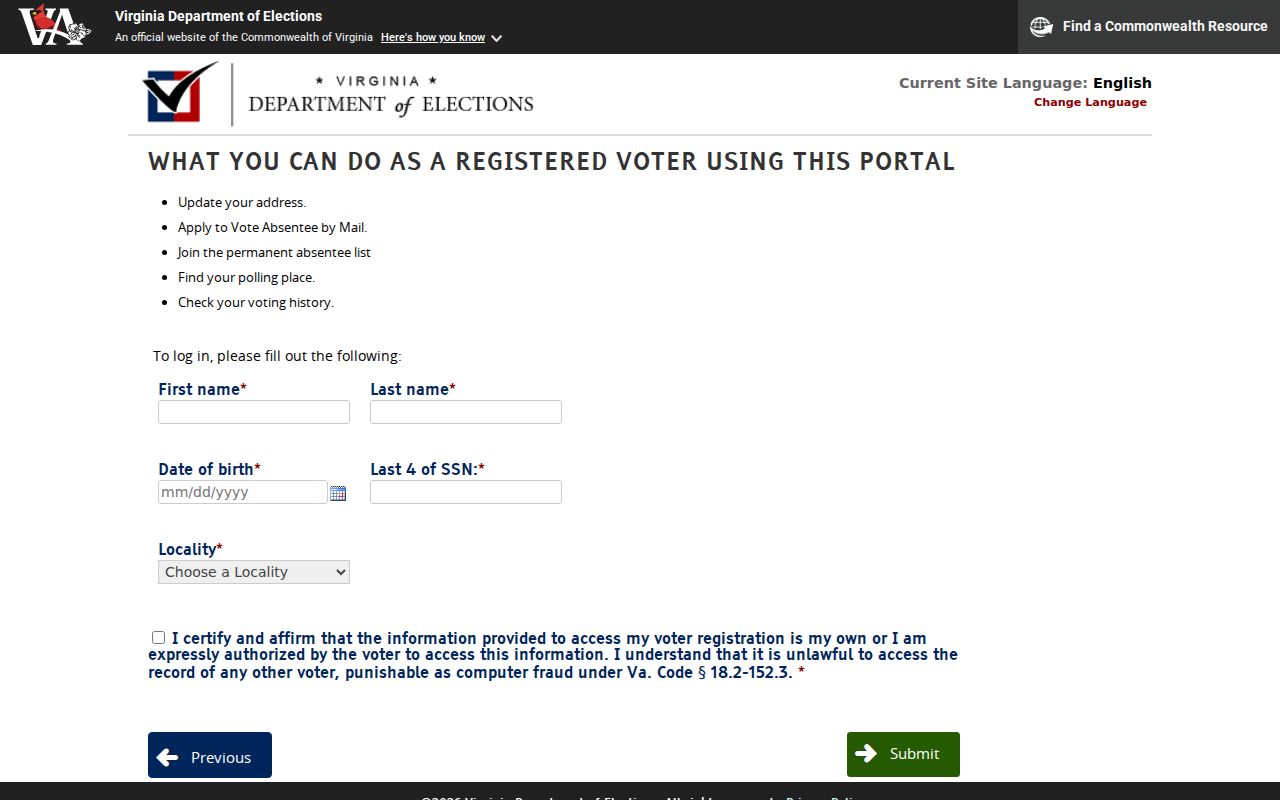
The local registrar can help with address and district questions at 500 Studio Drive, but a ZIP or neighborhood name should not be used to infer a district.
Virginia Beach Court Name Checks
The Virginia Judiciary’s OCIS route and the General District Court search are name and case-information tools, not identity proof. OCIS can be narrowed by court level, locality, criteria, case number, and hearing date after its terms are acknowledged. General District Court searches use Virginia Beach as the court, with name, case number, hearing date, data status, and service-process controls. The help material says archived data means before January 2007.
A court result may show a party role, case number, dates, entered charge or filing information, and code section. Juvenile, J&DR, sealed, and protected-party material can be unavailable by law. The proper next step for a certified disposition or a fuller file is the clerk, not an attempt to fill a protected gap from other sources.
The Virginia Judiciary OCIS displays the legal-agreement and case-search entry screen.
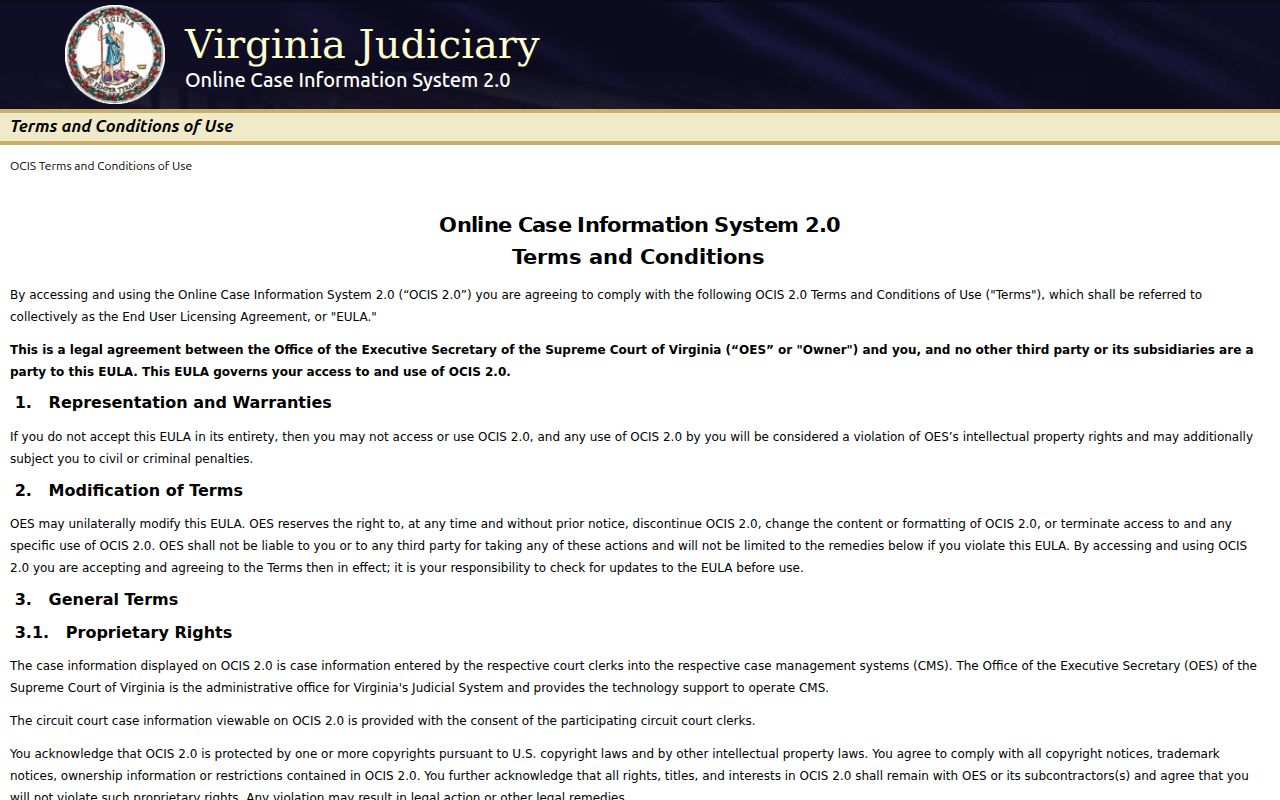
Keep the court, case number, date, and party role together so a common name is not overread.
Virginia Beach Vital Records
Vital records have firm public-opening periods. Under Va. Code §32.1-271, a birth record opens after 100 years. Death, marriage, divorce, and annulment records open after 25 years. Before those periods, certified copies generally require an immediate-family relationship or another authorized path with valid identification. The Virginia Beach Department of Health counter can issue certified Virginia records through the statewide system.
The local counter is open Monday through Friday from 8:15 a.m. to 5 p.m., but the registrar closes at 4 p.m. and no payment or application is accepted after that cutoff. Statewide alternatives include the official online or paper application, mail, VitalChek, other local health departments for qualifying death-certificate timing, and LVA genealogy material for older records.
The Virginia Beach vital-records counter lists local eligibility and timing information.
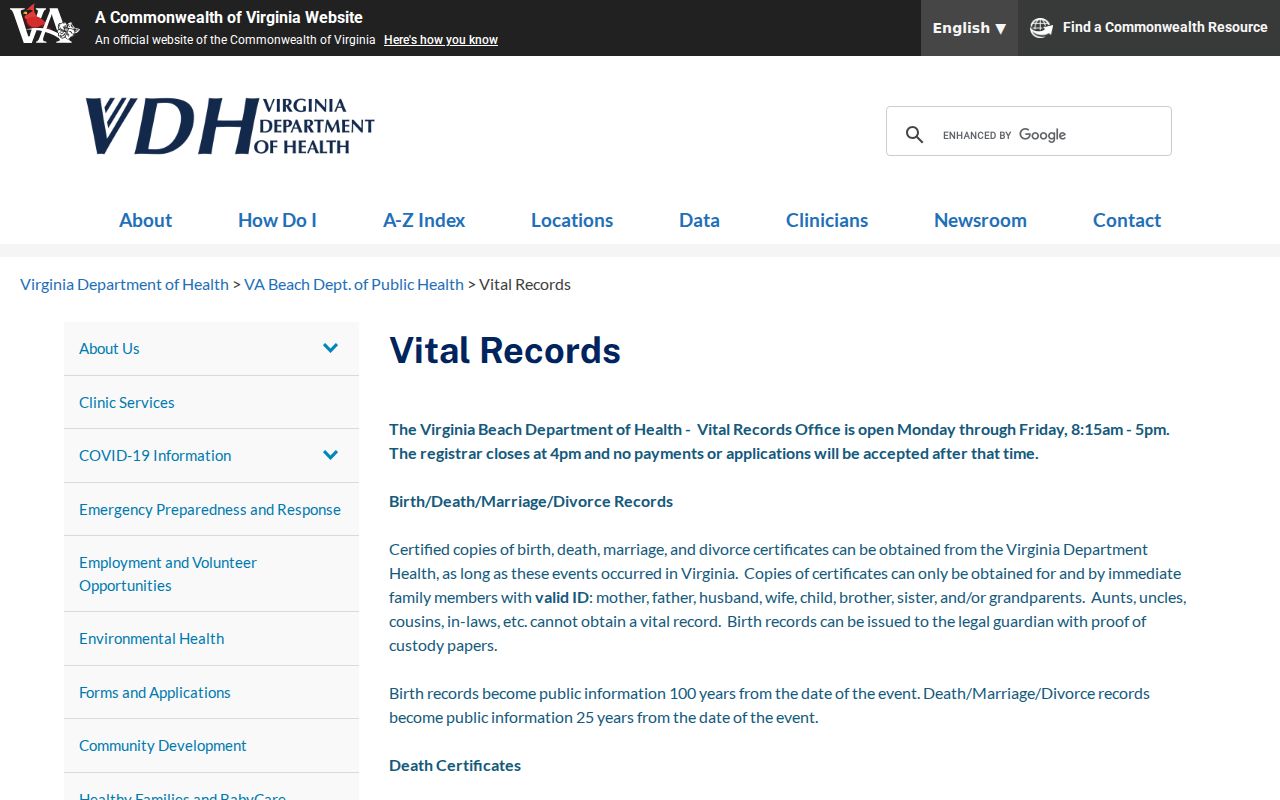
Confirm the current application route and fee before sending identification documents. The statewide VDH applications page distinguishes online and paper routes, record types, identity proof, fees, and status guidance.
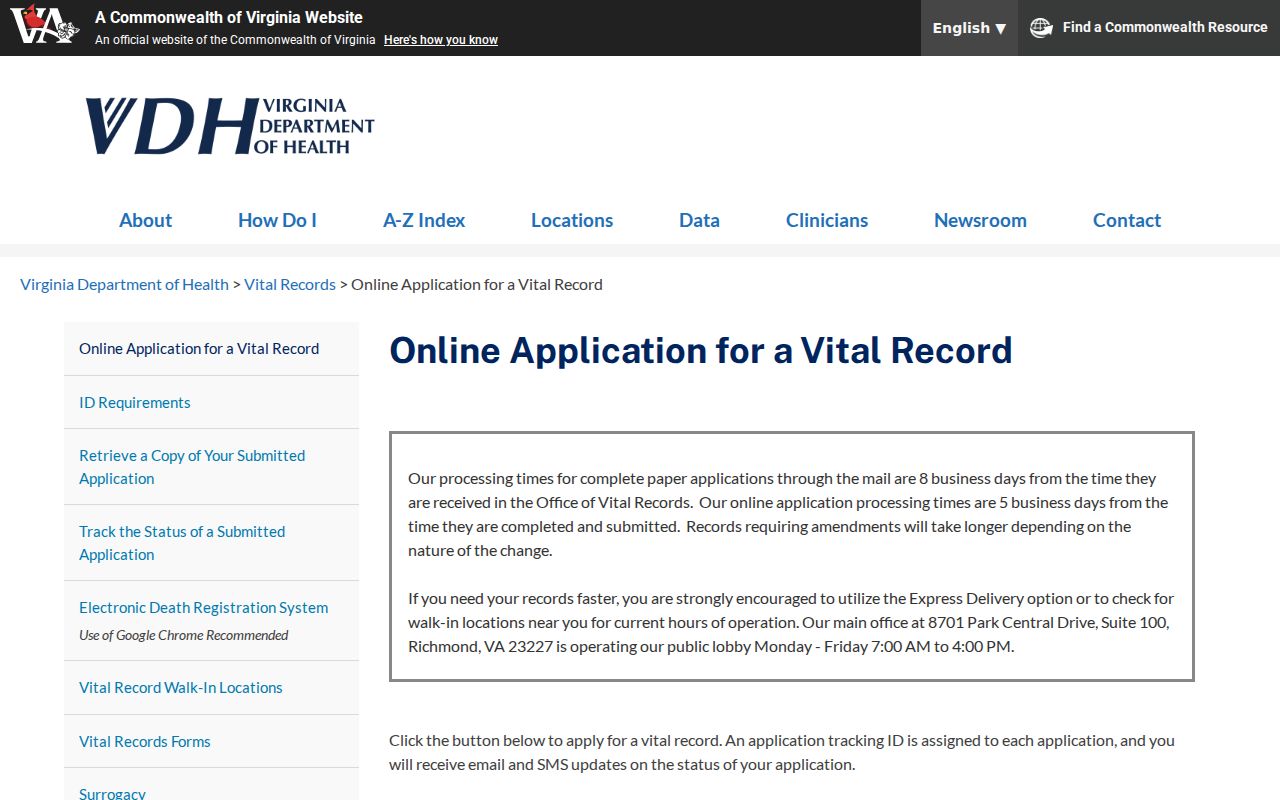
Use the official form rather than reconstructing an eligibility or identification requirement from a directory result.
Virginia Beach Public Filing Clues
Some official systems provide context rather than a resident roll. The Virginia State Corporation Commission’s CIS search can show an entity name, ID, type, status, formation date, registered agent, and public office fields. Virginia DPOR offers a license search by name, license, address, and type. Those entries establish a filing or license relationship. They do not establish a private home location or current personal activity.
Virginia’s Treasury also operates a free unclaimed-property path. It can help a person pursue a claim in their own name, but it should not be treated as evidence that a named person now lives in Virginia Beach.
The SCC business search shows its entity search controls and visible result categories.
Use the entity ID and filing date to distinguish an organization record from a personal residence record.
The Virginia unclaimed-property search is the state’s free Click and Claim route.
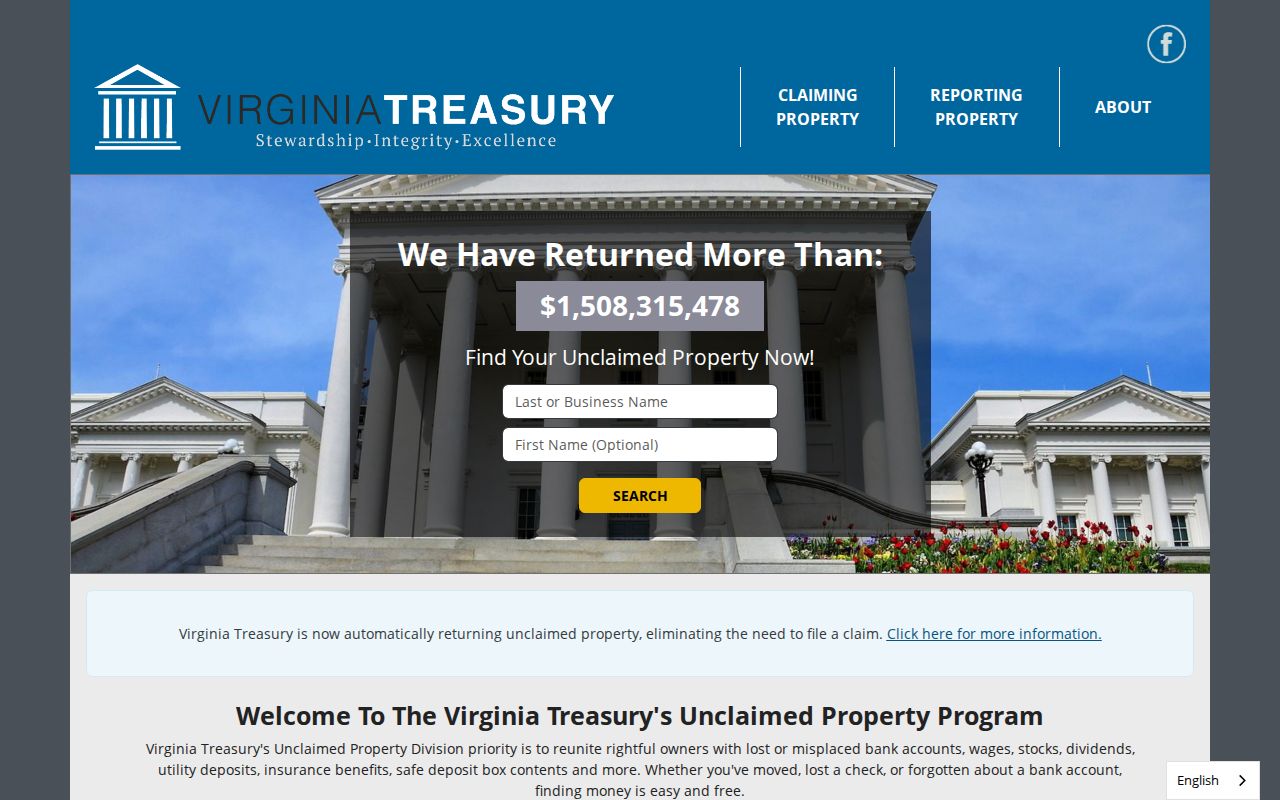
The official state path is the safer place to verify a claim message or an unexpected payment request.
Virginia Beach Access Fallbacks
When an online index stops short, use the channel that keeps the underlying record. The clerk accepts detailed mail copy requests with payment and a stamped return envelope. The M.E.O. Central Library’s Local History and Genealogy collection is on the second floor at 4100 Virginia Beach Boulevard; the Brown Archive has appointment-only originals and staff can help when a collection or box is known. LVA microfilm and the Chancery Records Index extend the historic route.
The Virginia Freedom of Information Act, Va. Code §§2.2-3700 through 2.2-3714, is a route to existing city records. Virginia Beach’s FOIA office accepts requests through its online center, email, fax, mail, in person, or phone. FOIA does not bypass court, vital, voter, juvenile, or protected-record limits. Ask the office that owns the record when a statutory access rule is involved.
Note: An unavailable web result can mean a counter, archive, subscription, confidentiality rule, or conservation condition, not that the record never existed.
Historic Virginia Beach Resident Directories
Virginia Beach historical directories are a dated household layer. A confirmed 1971 Hill Directory Company volume is available through the Virginia Beach Public Library’s digital archive, and a 1972 volume is available through a FamilySearch catalog record. Research leads also identify scattered telephone and city-directory runs from the 1930s through the 1990s, but exact editions should be checked with the library catalog before a coverage claim is made.
A printed entry can include a name, initial, address, occupation, business, or subscriber information. Compare adjacent editions and use a reverse or criss-cross section when it exists. The Brown Archive, VBPL digital archive, Internet Archive collection, newspaper databases, and Library of Virginia give the entry context. A full collection-by-collection treatment belongs in the Virginia Beach city directory pages.
The 1971 Virginia Beach directory item shows the repository metadata and access route. Directory evidence is strongest when its edition, page, address form, and companion record are saved together.
Virginia Beach Privacy Boundaries
Virginia public records have limits. The Address Confidentiality Program can substitute a designated address for eligible participants. Voter lists exclude protected details, the status portal requires authorization, and vital, juvenile, J&DR, sealed, and protected court records may be unavailable by design. A missing result should never invite an attempt to reconstruct private details through unrelated systems.
Public permit numbers and property addresses can also be misused. In March 2026, Virginia Beach warned about fake permit emails that used real application details to demand payment. Verify a message by using the city’s published phone number or official domain, never a link or number supplied in an unsolicited notice.